
Biomedical research grant awardee 2019
How Early Life Stress Affects the Brain: Investigating Mitochondrial Metabolism
Prof. Vidita Vaidya
Tata Institute of fundamental Research (TIFR), Mumbai
Our research aims to investigate the impact of early life stress on mitochondrial metabolism within limbic brain regions, and its implications for adult psychopathology and aging-associated dysfunction. We will conduct preclinical studies using rodent models to explore the role of specific aspects of mitochondrial function in mediating the influence of early adversity on the development of psychiatric diseases. Through our work, we aim to generate new insights into the underlying mechanisms that lead to lifelong changes in neural circuits following early stress and identify potential targets for therapeutic interventions. Our findings will have important implications for the development of novel biotechnological, nutritional and pharmacological approaches for the treatment of anxiety and depression, as well as aging-associated pathology.
As early adversity and trauma are major public health concerns in India, our research has important implications for improving the health and well-being of individuals who have experienced such adverse events. We anticipate that our study will provide a deeper understanding of the mechanisms that underlie the development of psychiatric diseases and offer new avenues for treatment. We hope that our work will contribute to the development of evidence-based interventions that can be used to improve the lives of those affected by early life stress, and ultimately lead to better health outcomes for all.
Publications out of this Research Project
Chaudhari PR, Singla A, Vaidya VA. Early Adversity and Accelerated Brain Aging: A Mini-Review. Front Mol Neurosci. 2022 Mar 22;15:822917. doi: 10.3389/fnmol.2022.822917. PMID: 35392273; PMCID: PMC8980717. Click here to access the article.
Tiwari P, Fanibunda SE, Kapri D, Vasaya S, Pati S, Vaidya VA. GPCR signaling: role in mediating the effects of early adversity in psychiatric disorders. FEBS J. 2021 Apr;288(8):2602-2621. doi: 10.1111/febs.15738. Epub 2021 Feb 16. PMID: 33523596. Click here to access the article.
Collaborator
Dr Ullas Kolthur-Seetharam
Tata Institute of fundamental Research (TIFR), Mumbai


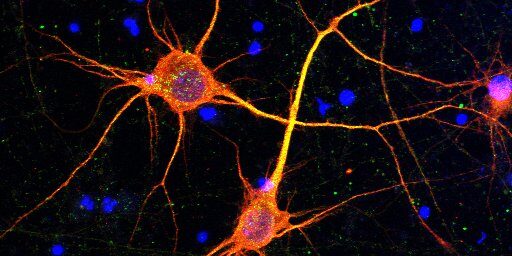
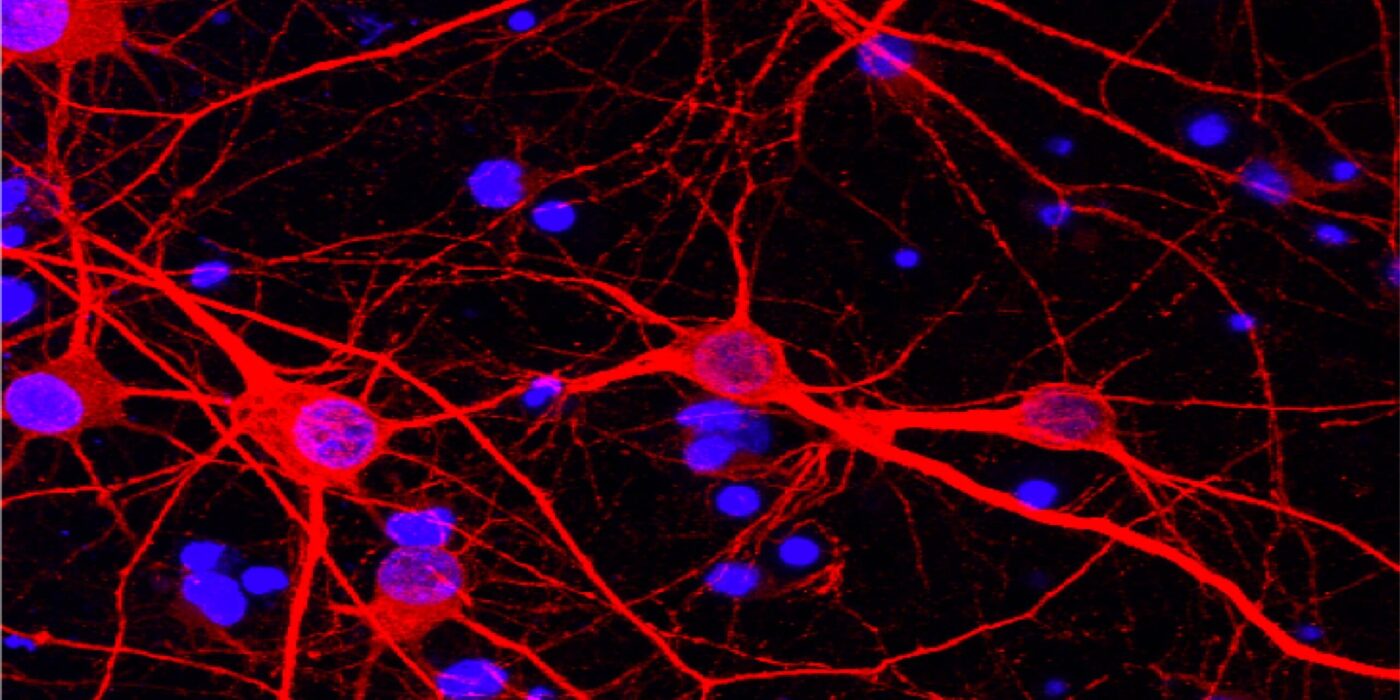
Cortical neurons co-labeled for the mitochondrial protein VDAC (Voltage dependent anion channel) and the neuronal marker MAP2 (microtubule associated protein-2)
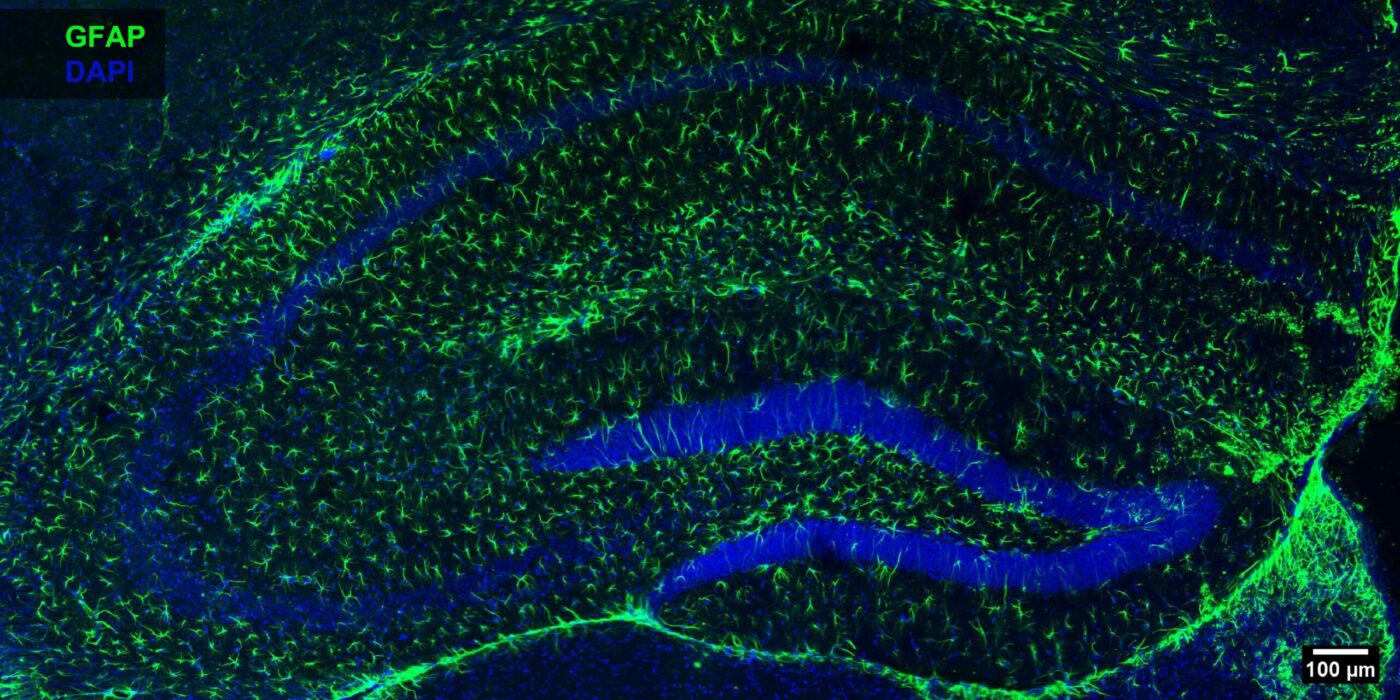
GFAP labelled astrocytes in the adult mouse hippocampus